Telecom, Data Centers & Critical Systems

Modern battery solutions deliver dependable backup power that keeps the world running. From data centers and telecommunications networks to essential infrastructure, batteries ensure connectivity, resilience, and economic security — powering innovation, growth, and the digital future.

Resiliency and Reliability: When Every Moment Counts

For decades, batteries have been relied on for data center and telecom backup power. The proven and sustainable technology of lead batteries with a relatively low up-front cost, recyclability, safety and well-understood maintenance requirements makes them a trusted solution.

Batteries are becoming even more essential to these critical industries as the demands on our electrical grids increase and as more power comes from solar and wind energy.

Renewable energy sources require storage of the energy when its abundant and discharging it when it’s needed to meet demand. Batteries can also help balance other kinds of variability on power grids, allowing for more cost-effective and efficient operations and stable power for data centers and telecom systems.

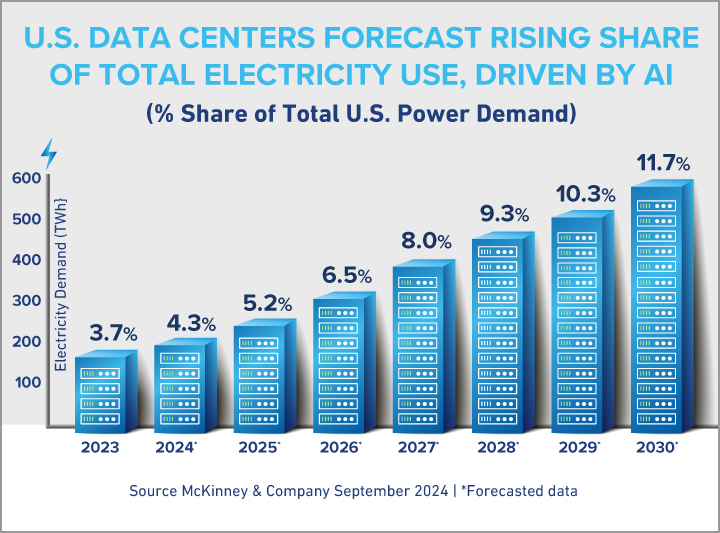
Chart showing US data center demand surge from 2023 to 2030

Data Center Demand Surge

The rapid growth of AI and hyperscale data centers is driving an unprecedented need for battery energy storage. These facilities require 24/7 uptime and consistent power quality to keep operations running smoothly.

To meet this challenge, two battery stationary energy storage solutions are essential:

  • Uninterruptible Power Supply (UPS)
  • Battery Energy Storage Systems (BESS).

Together, BESS and UPS systems form the backbone of digital infrastructure resilience. Even a brief power disruption can halt AI progressions, interrupt cloud services, and compromise critical digital operations – impacting industries from healthcare to national defense.

The demand for batteries is surging:

  • U.S. data centers are projected to consume 400–600 TWh of electricity by 2030, representing nearly 12% of total U.S. electricity usage.

“A major driver in the data center industry is finding carbon neutral ‘greener’ power sources. … There is a major push toward products that fit a circular economy. Lead batteries meet this requirement.”

Nicola Corradin, Product and Strategic Marketing Manager at FIAMM Energy Technology (Reserve Power Solutions Division)
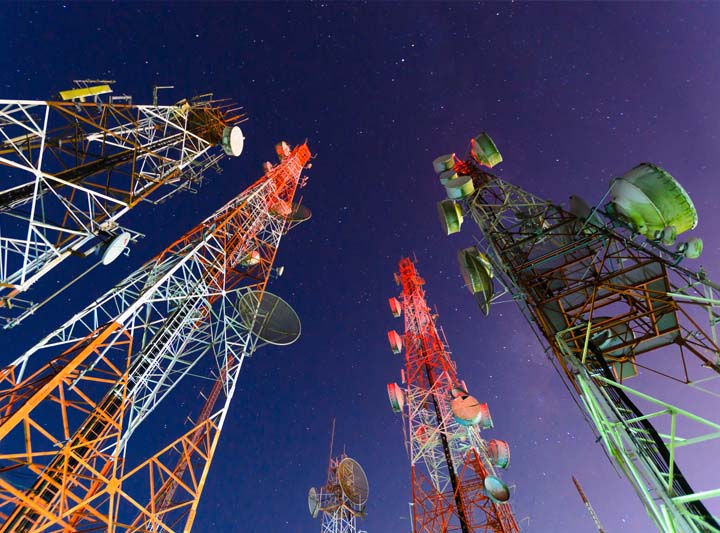
A low-angle view of multiple telecommunications towers with antennas and satellite dishes.

Telecommunications: Keeping Us Connected

In times of crisis, batteries provide the critical backup power that helps us stay safe and connected. In fact, the telecom industry uses lead batteries for over 80% of the backup power required for our 24/7 mobile connections. Consider these additional facts:

  • Lead batteries are the dominant technology used to deliver UPS to telecommunications systems, such emergency call centers and cellphone towers.
  • Lead batteries are the battery of choice for telecommunications centers to meet the mandate set by the Federal Communications Commission to provide continuous backup power for 911 call centers.
  • When the power goes out, lead batteries also ensure our access to internet services, television and radio.
  • Lead battery energy storage systems moderate the variability of electric grids to keep online communication consistently accessible.

And, lead batteries will remain a leader. Research shows the battery market in the telecommunication industry is poised to grow by $5.95 billion during 2022-2026. In 2021, the lead battery segment had a significant market share and this is expected to continue, in part, due to lead batteries’ relatively low cost and impressive safety profile.

telecom
Lead is the dominant battery chemistry used to support a U.S. communications infrastructure worth more than $1 trillion.
John Howes

The Energy Storage Grand Challenge report….reflects growing recognition from DOE and others that lead batteries are among important energy storage technologies that require investment to secure America’s global leadership on technological innovation and a green economy infrastructure.

John Howes, Principal, Redland Energy Group